Nimblefaçade:
Accelerate Façade Decarbonisation

The calculation was never the slow part
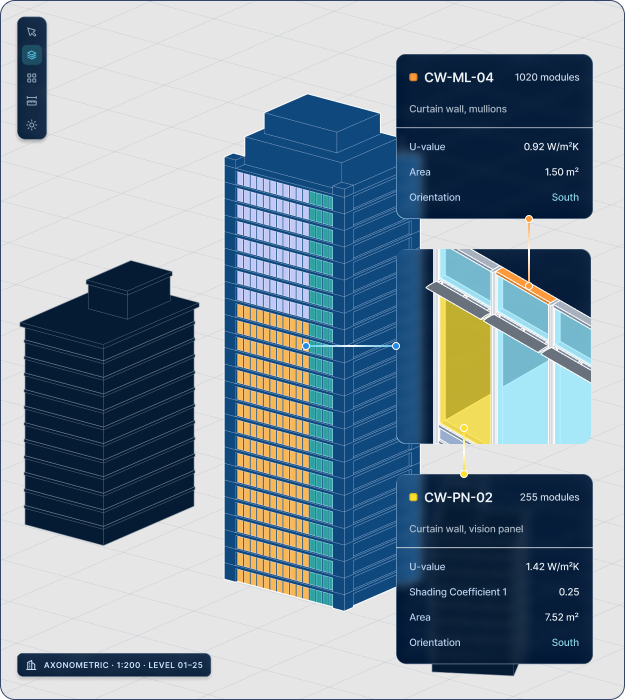
Areas, orientations and component types come straight out of the IFC, so nobody is scaling off elevation drawings or retyping numbers into a spreadsheet.
Mullions, thermal breaks and curved panels are calculated discretely instead of being simplified into a flat box, so you report the ETTV result without an excessive margin in the glazing spec.
One export gives you the Excel ETTV report plus annotated plan and elevation PDFs, so the drawing mark-up that used to be its own job is already done.
Every result traces back to the instances behind it and the shadow view shows what's shading each panel, which matters when the calculation goes out under your licence.
Model in, performance report out.
Everything between IFC and ETTV Submission
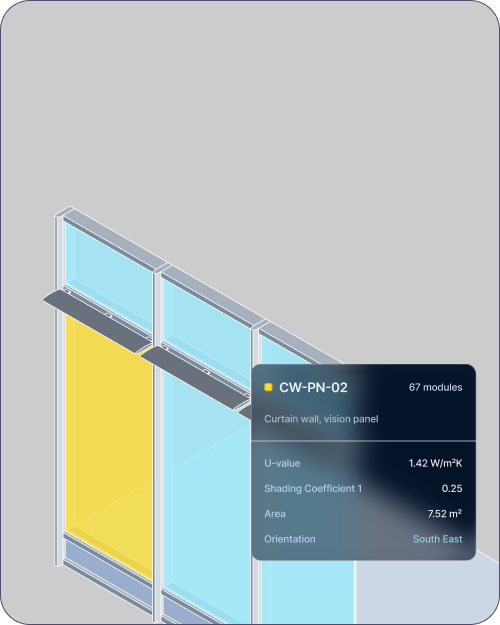


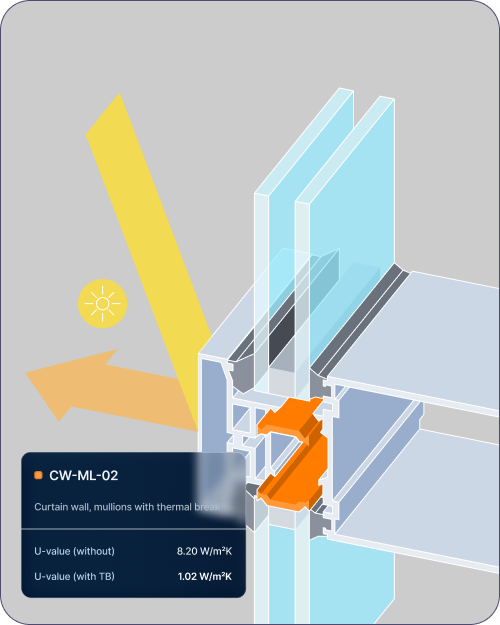

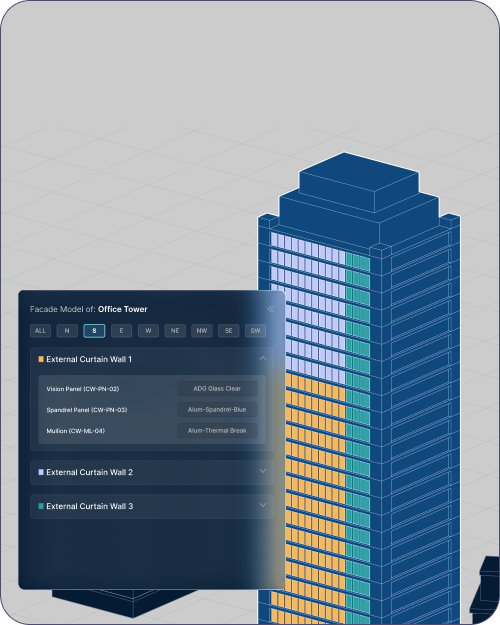

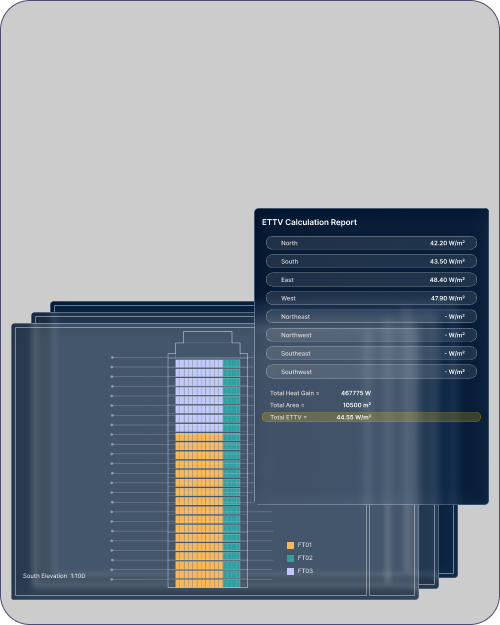


NimbleFaçade cuts down time taken for ETTV calculation and reporting by more than 80%
Get started today
+ Export up to 2 ETTV reports
+ Technical support
+ Unlimited ETTV report exports
+ Technical support
Questions about NimbleFaçade
Yes. We offer free trial accounts for NimbleFaçade and support you for your first project. Your first project is free!
We currently support the Industry Foundation Classes (IFC) file format only. IFC models should be prepared according to the CorenetX IFC Schema.
NimbleFaçade does not have access to user project data. Only registered users may access project data.
You can upload and run unlimited ETTV simulations with a basic subscription. Export credits are only deducted when you export a submission report.
The unused export credits will be forfeited after the expiry date.
The unused credits will automatically have their expiry dates extended to match the latest expiry date of your most recently purchased credit pack, as long as you remain an active user.
All your project data is encrypted in transit and at rest according to Google Cloud security policy. Click here to refer to the NimbleFaçade data privacy terms.
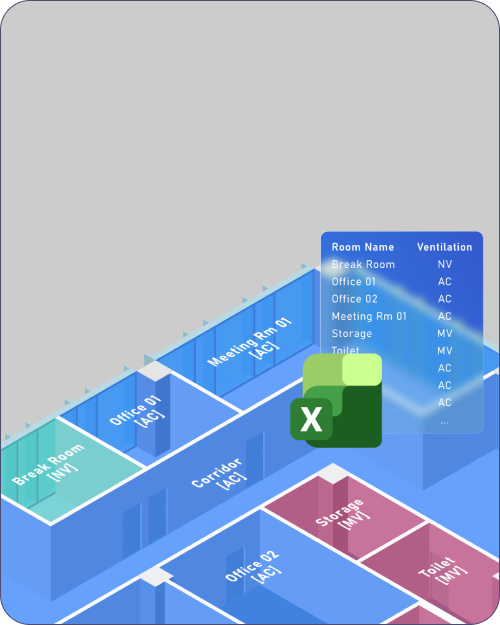
- The software uses the Mode of Ventilation (MOV) information to select the relevant facades for computation.
- The MOV information can be automatically pushed into the Revit models using Excel tables before the IFC model is exported. We can guide you on the process.
Yes, after each run is completed, you can download the ETTV calculation in XLS format and the annotated 3D model in DXF format.
